Voltmat Power Voltmat Power

Top Renewable Energy Power Supply Suppliers Worldwide

Time:2026-09-27 Author:Sophia
0%

Renewable Energy Power Supply is moving from a strategic option to a core requirement for modern economies. The International Energy Agency reported that global renewable capacity additions reached approximately 510 gigawatts in 2023, nearly 50% higher than the previous year. Solar photovoltaic systems drove much of this growth, with panels appearing across factory roofs, utility-scale fields, and remote communities.

The market remains uneven. Grid connections, storage capacity, permitting delays, and supply-chain concentration still affect project reliability. The International Renewable Energy Agency recorded about 3,870 gigawatts of renewable capacity worldwide at the end of 2023. Its World Energy Transitions Outlook 2024 indicates that capacity must exceed 11,000 gigawatts by 2030 to support the global energy transition. That gap is substantial.

As IRENA Director-General Francesco La Camera stated, “The world needs to triple renewable power capacity by 2030.” This target gives suppliers a clear benchmark. However, installed capacity alone does not guarantee dependable electricity. Battery storage, flexible transmission, forecasting systems, and qualified maintenance teams matter equally. This is where many rankings become too simple. A supplier with large output may still face weak regional resilience or limited recycling plans.

This article examines leading Renewable Energy Power Supply suppliers worldwide through capacity, technology, geographic reach, project experience, and disclosed sustainability performance. The comparison uses evidence from IEA and IRENA reports, company filings, and publicly available project data. Some figures may change as projects enter operation. That uncertainty deserves attention, not concealment.
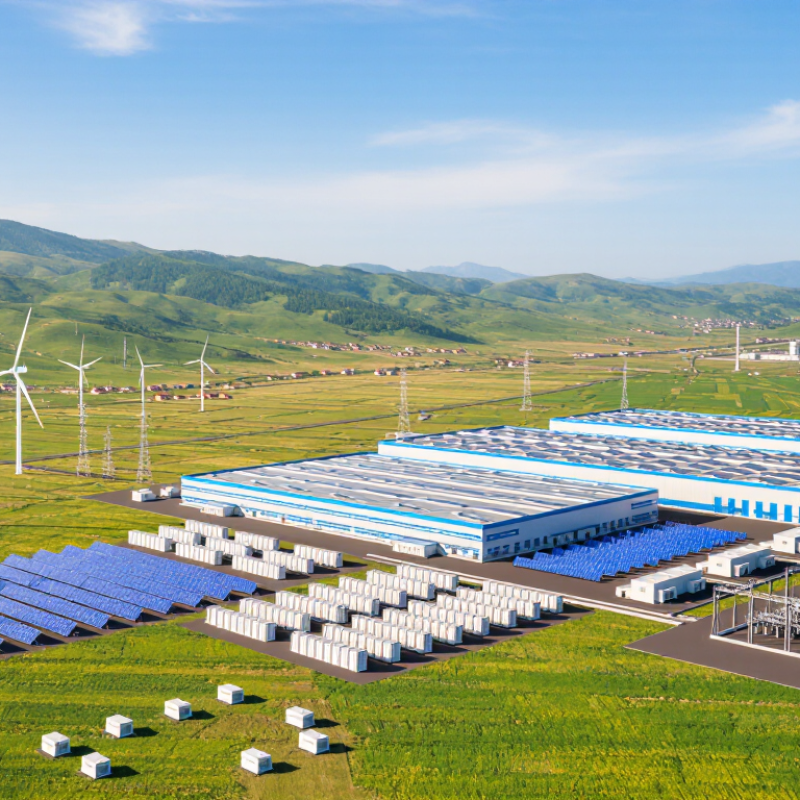
Top Renewable Energy Power Supply Suppliers Worldwide

Global Renewable Energy Power Supply Suppliers: Market Overview

Global renewable energy power supply suppliers operate in a market shaped by rapid capacity growth, grid constraints, and uneven project demand.

IRENA’s Renewable Capacity Statistics 2024 reports that renewable power capacity increased by 473 gigawatts in 2023, reaching 3,870 gigawatts worldwide. Solar and wind drove most new installations. For suppliers, this means demand extends beyond generating equipment to inverters, transformers, storage systems, and grid connections. The details matter.

The IEA’s Renewables 2024 report projects nearly 5,500 gigawatts of renewable capacity additions between 2024 and 2030. That outlook supports continued investment in manufacturing and supply networks, but forecasts are not purchase orders.

Permitting delays, financing costs, and limited grid capacity can shift delivery schedules. A solar project may have panels ready while waiting for a transformer or a connection approval. That mismatch is easy to underestimate.

A useful supplier assessment therefore looks beyond quoted equipment prices. Buyers often compare conversion efficiency, operating performance, delivery reliability, spare-parts access, and technical support over a project’s lifetime. Data from major reports describes the broad market, not every local procurement bottleneck. Some uncertainty remains. Teams should verify specifications and delivery commitments against site conditions, especially where storage or grid upgrades are essential.

Key Technologies Used by Leading Renewable Energy Suppliers

Leading renewable energy suppliers combine generation equipment with controls that keep power stable as weather changes. Solar photovoltaic modules convert daylight into direct current, while inverters transform it into grid-compatible alternating current. Modern inverters can also help manage voltage and frequency. Small details matter. Heat, dust, and shade can reduce output, so monitoring systems track performance across individual strings or panels.

Wind systems use sensors to adjust blade direction and rotor speed as wind conditions shift. Predictive maintenance tools review vibration and temperature data from components such as bearings and gearboxes. Battery energy storage adds flexibility: it can absorb surplus electricity at midday and release it during evening demand. That sounds tidy on paper; site conditions rarely are. Batteries need careful thermal management, and their usefulness depends on local grid needs and operating plans.

Forecasting software combines weather data with historical generation to estimate near-term supply. Grid-forming controls can help some inverters support network stability, especially where conventional generators are less available. Hybrid projects may coordinate solar, wind, storage, and existing hydropower through one energy management system. Integration is the hard part. A supplier’s technical claims are more useful when paired with independent performance testing, clear maintenance procedures, and realistic assumptions about degradation. Even good forecasts miss sometimes.

Major Renewable Energy Power Supply Suppliers by Region

Across renewable energy markets, regional suppliers differ less by slogans than by grid conditions, manufacturing depth, and service reach. In Europe, suppliers often work within established interconnection standards and mature balancing markets. Their proposals may combine wind, solar, storage, and controls to smooth variable output. North American providers serve varied climates and utility rules, so local engineering support matters. A cold-weather inverter may perform differently from equipment tested mainly in mild conditions. That detail matters.

Asia-Pacific suppliers span major manufacturing hubs and island grids with limited transmission. Some focus on utility-scale solar and battery integration; others support rooftop or remote systems. Buyers should verify spare-parts access, warranty response times, and commissioning expertise near the project site. Regional scale can lower equipment costs, but shipping delays may offset savings. This is easy to miss.

In Latin America, strong solar and wind resources coexist with uneven grid capacity and long distances. African markets also need suppliers prepared for heat, dust, weak transmission, and limited service teams. A capable supplier should provide audited performance data, clear degradation assumptions, and realistic delivery schedules. Still, no supplier can remove every local constraint; forecast yields are estimates, not promises. Site visits sometimes reveal issues missing from polished proposals.

Supplier Evaluation: Capacity, Reliability, Cost, and Sustainability

Supplier evaluation should begin with deliverable capacity, not a headline figure. Check operating assets, manufacturing throughput, project references, and realistic delivery dates. IRENA reported that global renewable capacity grew by 473 GW in 2023, with renewables accounting for 86% of additions. That rapid expansion makes a supplier’s verified track record especially important. Ask for performance data from comparable sites, including availability, outage rates, and repair response times. A warranty alone is not proof of dependable output.

Cost needs context. IRENA’s Renewable Power Generation Costs in 2023 report put the global weighted-average levelized cost at about $0.044 per kilowatt-hour for new utility-scale solar PV and $0.033 for onshore wind. These figures are benchmarks, not supplier quotations. Compare bids using the same assumptions for financing, grid connection, maintenance, and equipment life. A weak spot in many scorecards is the tidy spreadsheet: it can hide delays, replacement costs, or uncertain output. Worth checking twice.

Sustainability claims also need evidence. Request product-level lifecycle disclosures covering materials, manufacturing energy, transport, and end-of-life handling. The IPCC’s lifecycle assessment literature reports median emissions of roughly 11 grams of CO2-equivalent per kilowatt-hour for wind and 48 for solar PV; results vary by technology and study boundaries. Suppliers should explain their figures clearly. If they cannot, treat the gap as a risk, not a small footnote.

Top Renewable Energy Power Supply Suppliers Worldwide — Supplier Evaluation: Capacity, Reliability, Cost, and Sustainability

Vendor-neutral comparison of major renewable power technologies. Scores are normalized to a 0–100 scale; a higher score indicates a stronger result for that measure.

Capacity reflects 2023 global installed capacity; reliability uses 2023 U.S. capacity factor as a generation-consistency proxy. Cost is based on 2023 global weighted-average LCOE, and sustainability uses median lifecycle greenhouse-gas emissions. These are technology-level benchmarks, not rankings of individual suppliers.

Benchmark inputs: installed capacity—IRENA; capacity factors—U.S. EIA; LCOE—IRENA; lifecycle emissions—IPCC. Reference values: solar PV 1,418 GW, 23%, $44/MWh, 48 gCO₂e/kWh; onshore wind 1,017 GW, 34%, $33/MWh, 11 gCO₂e/kWh; hydropower 1,268 GW, 37%, $57/MWh, 24 gCO₂e/kWh. Scores are calculated from these inputs, with the strongest result in each measure set to 100.

Emerging Trends in the Global Renewable Energy Supply Industry

Renewable power supply is shifting from simple generation toward coordinated systems. Solar and wind projects increasingly pair with batteries, forecasting software, and flexible demand. This helps smooth output when clouds pass or evening winds weaken. Buyers are also asking for clearer information about hourly generation, grid access, and equipment origin. The details matter.

Across global supply chains, manufacturers are expanding regional production and exploring material recovery. Reusing metals from retired equipment could reduce pressure on mineral supply, though collection systems remain uneven. Grid congestion is another growing concern: a power plant can be ready while its connection is not. The picture is not perfectly tidy. Costs, permitting delays, and limited storage can still slow deployment, and public forecasts do not always capture local constraints.

Tips: Compare suppliers using delivery records, equipment warranties, and transparent project data. Ask how they handle component shortages and end-of-life materials. Check whether their output profile matches your actual demand, not just annual energy estimates. Small gaps in the data deserve a second look.

Top Renewable Energy Power Supply Suppliers Worldwide - Emerging Trends in the Global Renewable Energy Supply Industry

Supply Segment Global 2024 Indicator Emerging Industry Trend Implications for Power Supply
Solar power Approximately 452 GW of renewable capacity was added globally. Solar accounted for the largest share of new renewable capacity, supported by utility-scale projects and distributed installations. Suppliers are increasingly focused on scalable project delivery, grid connections, storage integration, and flexible power contracts.
Wind power Approximately 113 GW of renewable capacity was added globally. Onshore wind remained a major source of new capacity, while offshore projects continued to develop in suitable markets. Longer project timelines and grid-planning requirements increase the value of coordinated equipment, construction, and operations services.
Hydropower Hydropower represented approximately 1,283 GW of global installed capacity at year-end 2024. Existing facilities remain important for renewable generation, dispatchable supply, and balancing variable output. Modernization, reliability, and flexible operation are key supply priorities, particularly where new sites are limited.
Renewable energy overall Global installed renewable power capacity reached approximately 4,448 GW in 2024, with about 585 GW added during the year. Renewables made up approximately 92.5% of total power-capacity expansion in 2024. Rapid capacity growth is increasing demand for transmission upgrades, system flexibility, storage, and dependable project delivery.

Data note: Global capacity figures are rounded. Capacity and annual additions are based on the International Renewable Energy Agency’s Renewable Capacity Statistics 2025. Industry-trend and supply-implication descriptions are qualitative summaries.

FAQS

How do solar systems turn daylight into usable electricity?

Solar modules produce direct current, and inverters convert it into grid-compatible alternating current. Heat, dust, and shade can lower output.

What do wind sensors and maintenance tools monitor?

Sensors adjust blade direction and rotor speed as winds change. Maintenance tools track vibration and temperature around bearings and gearboxes. Small signals matter.

How can battery storage support a renewable energy project?

Batteries can store surplus midday electricity and release it during evening demand. Their value depends on local grid needs and careful temperature control.

Why does combining solar, wind, and storage require careful planning?

One control system may coordinate several sources, but integration is difficult. Weather forecasts help, though they still miss sometimes.

What should buyers check when comparing suppliers across regions?

Check nearby service teams, spare-parts access, warranty response times, and commissioning experience. Heat, dust, shipping delays, and weak transmission can change project performance.

How can buyers judge a supplier’s reliability?

Review comparable project data, including availability, outages, repair times, and delivery records. A warranty alone proves little. Site visits can reveal overlooked issues.

Are published renewable energy costs direct supplier quotations?

No. In 2023, global weighted-average costs were about $0.044 per kilowatt-hour for utility-scale solar and $0.033 for onshore wind. These are benchmarks, not bids.

What sustainability evidence should a supplier provide?

Request lifecycle disclosures covering materials, manufacturing energy, transport, and end-of-life handling. Reported median emissions were roughly 11 grams of CO2-equivalent per kilowatt-hour for wind and 48 for solar. Boundaries vary.

Can a supplier guarantee forecast energy output?

Forecasts are estimates, not promises. Compare assumptions about degradation, maintenance, and local conditions. I still find polished forecasts easy to over-trust.

Conclusion

This article explores the global Renewable Energy Power Supply market, explaining how suppliers help meet rising electricity needs while supporting the shift toward lower-emission energy systems. It introduces the market’s development and examines key technologies, including solar and wind generation, energy storage, smart grid systems, and solutions that combine multiple renewable sources. It also considers how supplier strengths and market conditions differ across regions.

The article outlines practical ways to evaluate suppliers, comparing generation capacity, service reliability, overall cost, and sustainability performance. It then reviews emerging industry trends, such as improved storage capabilities, digital energy management, and more flexible grid integration. Together, these topics provide a clear framework for understanding the opportunities and challenges shaping renewable energy supply worldwide.

Sophia

Sophia

Sophia is a dedicated marketing professional with an exceptional depth of knowledge about her company's products and services. With a keen understanding of market trends and customer needs, she crafts insightful blog posts that not only inform but also engage readers, enriching the company’s online......