Choosing the right Industrial Power Supply is crucial for operational efficiency. The global industrial power supply market is projected to reach $12.8 billion by 2026, according to recent industry reports. This rapid growth highlights the increasing reliance on industrial power supplies in various sectors.
Different applications require different specifications. Selecting an inappropriate power supply can cause inefficiencies or equipment damage. Factors like load requirements, efficiency ratings, and environmental conditions need careful consideration. For instance, a power supply must match the voltage and current specifications of the machinery to function effectively.
Moreover, reliability is non-negotiable. A power supply failure can halt production, leading to significant financial losses. It is essential to assess suppliers based on performance metrics and customer feedback. Performing a thorough evaluation ensures that your choice in industrial power supply aligns with industry standards and operational needs.
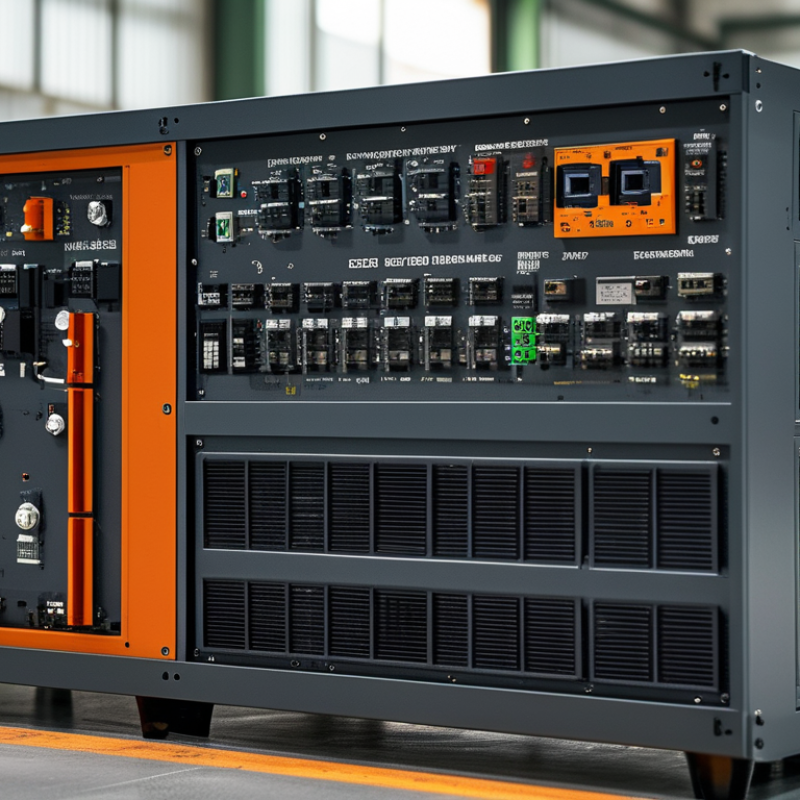
Understanding the Different Types of Industrial Power Supplies
Understanding the different types of industrial power supplies is crucial for any organization. The landscape is dominated by a few main types: linear, switching, and uninterruptible power supplies (UPS). These systems serve various needs based on power requirements, efficiency, and application suitability.
Linear power supplies offer simplicity and reliability. They deliver clean and stable output voltages. However, they tend to be bulky and less efficient. On the other hand, switching power supplies have gained popularity due to their compact size and higher efficiency. Reports indicate that switching supplies can reach over 90% efficiency under optimal conditions. This can significantly reduce energy waste and lower operating costs. Yet, their complexity introduces potential issues, such as electromagnetic interference.
Uninterruptible power supplies combine the best of both worlds. They provide backup power during outages, ensuring continuous operation. According to industry data, about 30% of companies experience downtime due to power interruptions. UPS systems also require careful selection based on load capacity and battery technology. As technologies evolve, so do the considerations for choosing the proper power supply, emphasizing the need for informed decision-making.
Types of Industrial Power Supplies
Identifying Your Power Requirements for Specific Applications
When identifying your power requirements, start by understanding the specific applications you will run. Consider the voltage and current ratings necessary for each device. Equipment may vary greatly in their demands, from small control panels to heavy machinery. A clear picture of these needs is critical. Collect data on peak power usage and continuous running requirements, as this information directs your power supply choice.
It’s easy to overlook the harmonics produced by devices in operation. These can impact power quality significantly. Recognizing the type of load helps. For instance, inductive loads like motors produce different characteristics compared to resistive loads like heating elements. Monitoring these aspects can prevent costly inefficiencies.
Engaging with professionals can clarify complex power needs. Beware of generic solutions; customization is often necessary. If you miscalculate, production might suffer. Experimenting with loads in controlled settings can provide insightful data. Reflecting on past choices enhances future decision-making. Addressing your specific power demands takes careful thought and diligence.
Evaluating Efficiency and Performance Ratings
When selecting an industrial power supply, efficiency and performance ratings are critical factors to consider.
These ratings often determine how well the unit converts input power into usable output power. Look for units with high efficiency percentages. An efficient power supply can significantly reduce energy costs, especially in continuous-operation environments. Efficiency ratings often vary based on load conditions, meaning a unit may be highly efficient at full load but less so at partial loads.
Performance ratings, including ripple voltage and transient response, are equally important. Ripple voltage refers to the fluctuations in output voltage. Excessive ripple can lead to device failure or erratic performance.
Transient response measures how well the power supply can cope with sudden changes in load. A slow transient response can mean that your connected devices might not receive steady power when they need it most, leading to potential disruptions.
Understanding these ratings requires careful analysis. It’s not always straightforward, particularly for those unfamiliar with technical specifications. Key details can easily be overlooked, impacting overall system reliability. Analyzing performance and efficiency should be continuous, not just a one-time assessment.
Considering Size, Weight, and Installation Space
When selecting an industrial power supply, size and weight matter significantly. Many facilities have limited space. A compact power supply fits better in tight environments. It reduces clutter and enhances safety. Consider how the power supply's dimensions align with your installation space. Larger units might come with more features but can be difficult to integrate.
Weight is also an important factor. Heavier power supplies may require sturdy mounting options. Thus, check the structural integrity of your installation area. Some setups can’t support heavier units without reinforcement. On the other hand, lightweight models are easier to handle during installation. But they might compromise on some performance aspects. Make sure to evaluate both the structure and the needs of your application.
Evaluate the installation environment too. Dusty areas or extreme temperatures can affect power supply longevity. In such cases, a rugged design is essential. Be mindful of whether you can provide adequate cooling or shielding. Balancing size, weight, and environmental factors leads to better decision-making. This process can improve your overall system performance.
Assessing Reliability and Safety Features in Power Supplies
When assessing reliability and safety features in industrial power supplies, several key aspects come into play. It's critical to evaluate how these power supplies perform under stress. According to a recent industry report, 40% of power supply failures occur due to inadequate thermal management. This emphasizes the importance of selecting units with robust cooling systems. Passive cooling solutions may suffice for low-power applications, but high-demand scenarios often require active cooling to maintain efficiency and avoid overheating.
Safety features are equally vital. Look for power supplies equipped with over-voltage, over-current, and short-circuit protection. These features collectively contribute to the longevity of the equipment. A study indicated that companies prioritizing these safety attributes reduced equipment downtime by 30%. Real-time monitoring capabilities also play a crucial role. They allow operators to receive instant alerts and act quickly should any anomalies arise.
Power supplies that comply with international safety standards, such as UL and CE, should not be overlooked. Compliance with these standards ensures a basic level of safety in installation and operation. However, the reality is that many users are unaware of the specific requirements suitable for their applications, leading to potential risks. It's necessary to proactively seek guidance and educate oneself on the complexities of power supply reliability and safety. Ignoring these facets can result in costly operational impacts and safety hazards.
FAQS
: The primary types are linear, switching, and uninterruptible power supplies (UPS). Each serves different needs.
Linear supplies are reliable and stable, but bulky. Switching supplies are compact and more efficient but complex.
They can achieve over 90% efficiency, reducing energy waste and operational costs significantly.
UPS systems provide backup power during outages, keeping operations running continuously and minimizing downtime.
Size affects installation and safety. A compact unit fits better in limited spaces, reducing clutter.
Yes, heavier units require sturdy mounting. Ensure your installation area can support them without reinforcement.
Dusty or extreme temperature areas can shorten lifespan. Choose rugged designs when necessary to enhance durability.
Ensure that your environment can provide adequate cooling or shielding to protect the power supply's functionality.
Yes, lightweight models may lack some features. Evaluate if the trade-off meets your application needs.
Informed decisions enhance system performance. Balancing factors leads to better application alignment and efficiency.
Conclusion
Choosing the right Industrial Power Supply is crucial for ensuring optimal performance in various applications. To begin, it is important to understand the different types of industrial power supplies available in the market. Each type has unique characteristics that cater to specific power requirements, which must be identified for your particular application. Additionally, evaluating efficiency and performance ratings will help in selecting a power supply that meets operational standards while minimizing energy waste.
Moreover, considerations such as size, weight, and installation space are important to ensure the power supply fits within existing infrastructure. Lastly, assessing reliability and safety features is essential to safeguard equipment and personnel. By following these guidelines, you can select an Industrial Power Supply that aligns with your operational needs and ensures long-lasting performance.
 Voltmat Power
